

A4 Copy Paper for Different Markets: What Should You Produce for Africa, the Middle East and Southeast Asia?
The same A4 paper size does not mean the same product requirements.
A4 copy paper is a familiar product. The sheet size is standardized, and the production process may look similar from one factory to another. But if you plan to sell A4 paper in Africa, the Middle East or Southeast Asia, there is an important question to answer before choosing your equipment:
What kind of A4 paper do your customers actually want to buy?
Some buyers look for the lowest price they can find. Others care more about paper quality, packaging, or a product that meets their company's purchasing requirements. Even within the same country, a wholesaler serving small stationery shops may have different needs from a distributor supplying offices and large organizations.
This is why planning an A4 paper production line should start with the market, not just the machine.
1. Africa: Is the Lowest-Priced Paper Always the Best Choice?
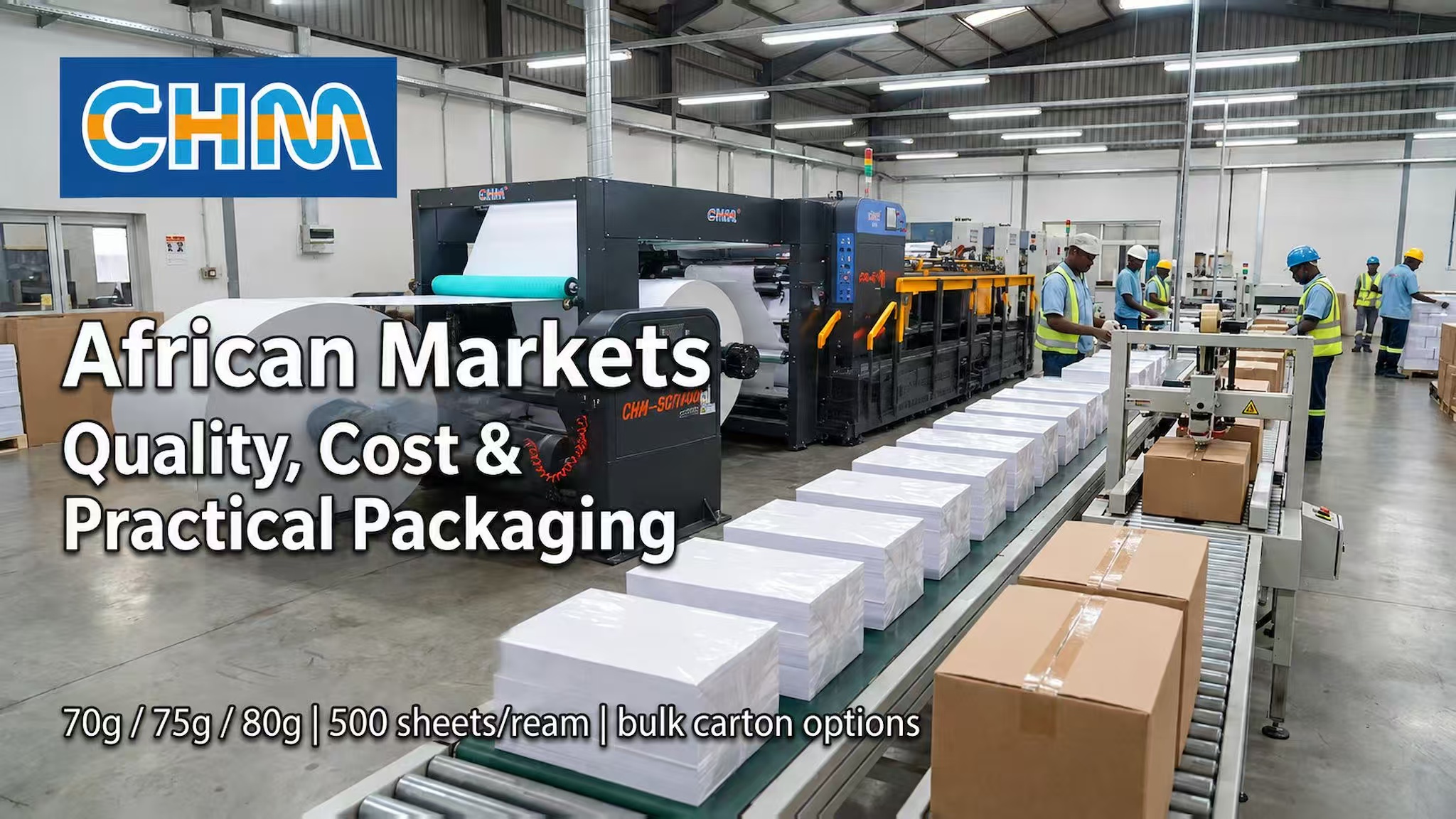
In many African markets, price is an important factor in purchasing decisions. Schools, offices, stationery retailers and printing businesses all need paper, but their budgets and buying habits can differ.
For manufacturers entering these markets, 70 gsm paper may be worth considering when targeting price-sensitive customers. Products at 75 gsm or 80 gsm may suit other buyers who expect a heavier sheet or have more specific requirements.
But there is something worth thinking about: lower paper weight does not automatically mean a more competitive product.
If the paper creates excessive dust, feeds poorly through office printers or has uneven cutting edges, customers may not be satisfied, even if the price is attractive. Distributors also need products they can sell repeatedly without dealing with avoidable complaints.
Packaging deserves the same attention. A standard 500-sheet ream is a familiar format, but the number of reams per carton, the wrapping material and the outer packaging should match the buyer's requirements.
Before investing in production equipment, it helps to speak with local distributors and compare the products already selling in your target market. Are buyers mainly comparing prices? Do they ask for a particular GSM? Do they prefer a specific carton quantity?
These answers can tell you more about the right product range than simply choosing the lowest-cost paper available.
2. The Middle East: What Makes a Product Worth Buying Again?
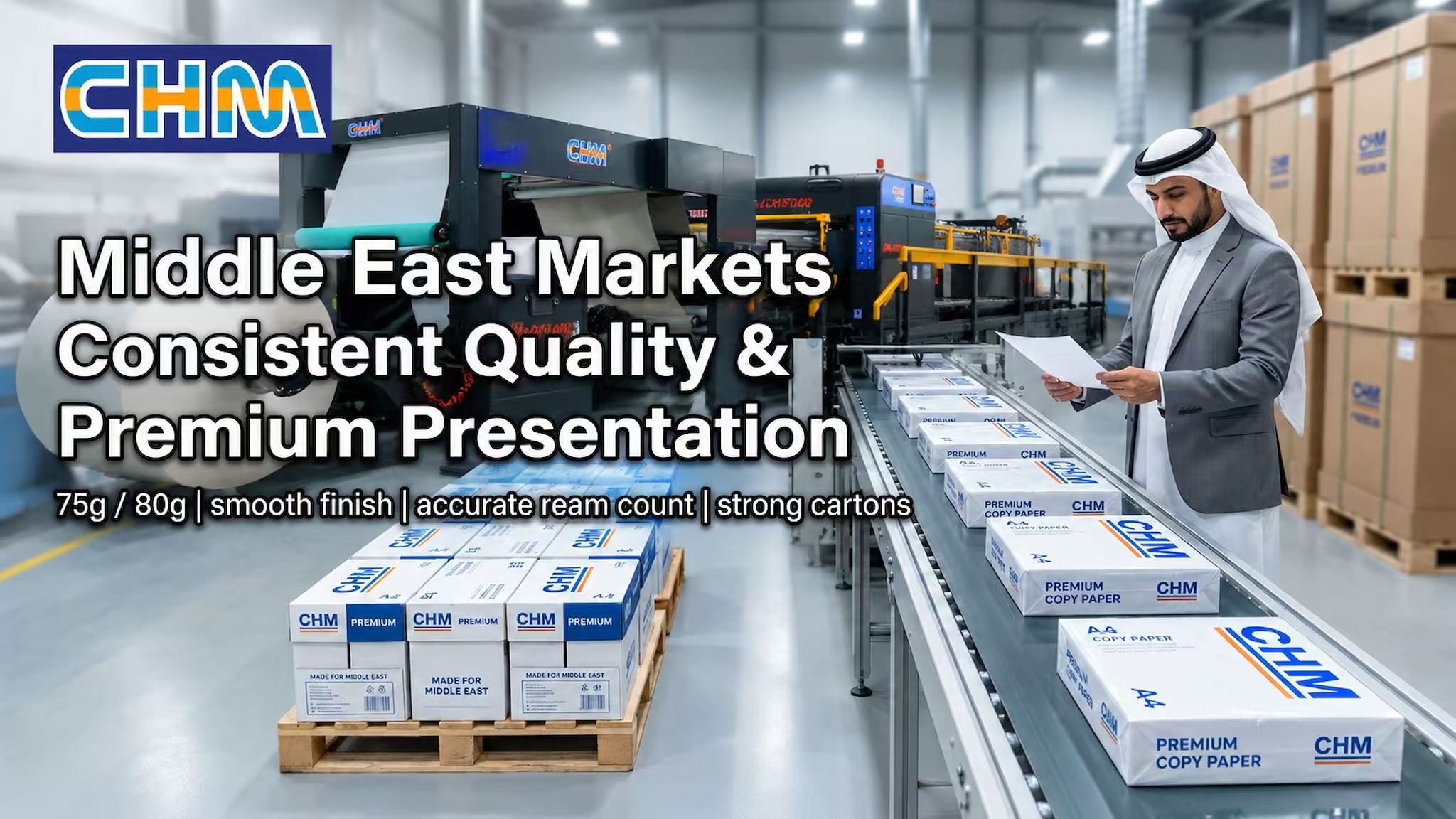
The Middle East includes different markets and customer groups, so it is difficult to define one specification that works everywhere. However, for manufacturers targeting established distributors or institutional buyers, consistency is worth careful consideration.
A buyer may accept a competitive price for the first order. But if the next batch has different sheet dimensions, poor wrapping or inconsistent quality, that first order may not lead to a long-term business relationship.
For general office use, 75 gsm and 80 gsm paper may be suitable options to evaluate, while 70 gsm can serve customers looking for a more economical product. The actual choice depends on local competition, customer expectations and the intended selling price.
The same principle applies to packaging.
A ream that is neatly wrapped, properly sealed and easy to handle gives distributors a more consistent product. For branded products, printed packaging, labeling and carton specifications may also need to meet the customer's requirements.
This raises an important point for production planning: Can your line produce the paper your customers want, and package it in the way they expect?
Cutting accuracy, reliable counting and stable ream wrapping all contribute to the finished product. If your business plans to supply different customers, consider whether the equipment can accommodate the required product specifications and packaging formats without making every change unnecessarily difficult.
3. Southeast Asia: How Much Flexibility Does Your Business Need?
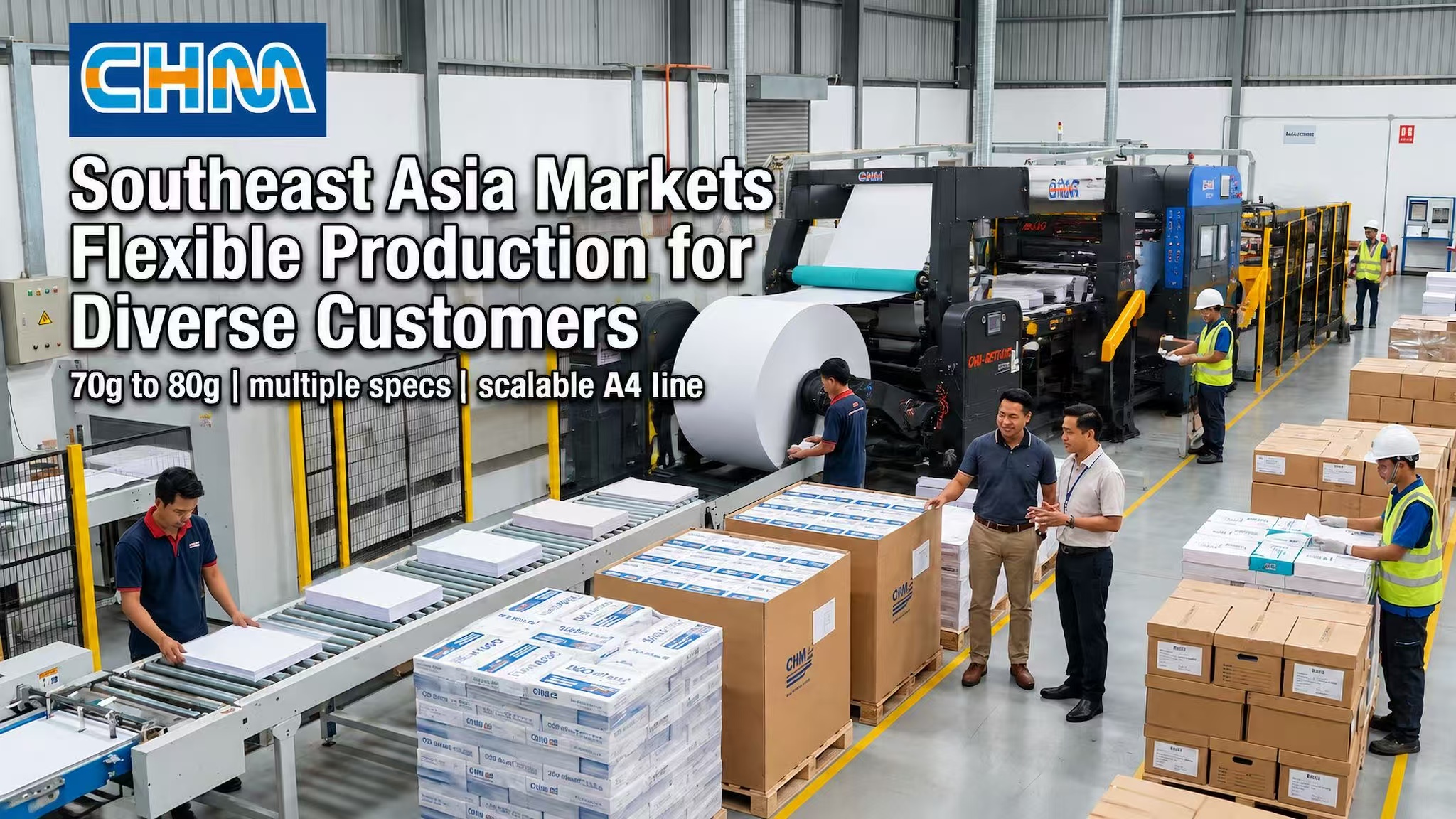
Southeast Asia presents another challenge: different customer groups may require different products, even when they buy from the same manufacturer.
One distributor may focus on affordable everyday copy paper. Another may supply offices that prefer 80 gsm paper. A third may want private-label products with specific wrapping and carton requirements.
For a manufacturer, serving these customers can create opportunities, but it also means production planning becomes more important.
Producing only one specification may simplify operations. However, if customer demand changes or a new buyer requests a different GSM or packaging format, limited production flexibility could become a disadvantage.
That does not mean every factory needs a fully automated production line. The more useful question is whether the equipment matches the business you want to build.
If your main customers place large, regular orders, stable output and automated ream wrapping may be priorities. If you are still developing your customer base, you may want to consider which functions are essential now and which can be added as the business grows.
Before making a decision, compare the expected order volume, labor costs, packaging requirements and available factory space. A practical setup should support your production plan without adding unnecessary equipment or expense.
4. From Market Requirements to the Right A4 Paper Production Line
Once you understand your target customers, the next step is translating their requirements into a production plan.
Start with four questions:
Paper weight: Will you focus on 70 gsm, 75 gsm, 80 gsm, or several specifications?
Finished product: Do customers require standard A4 sheets measuring 210 × 297 mm, and what sheet quality and cutting accuracy do they expect?
Packaging: Will you use 500 sheets per ream? How many reams should go into each carton? Is automatic film wrapping or additional carton packaging required?
Production volume: How much finished paper do you need to produce per shift, and how much manual handling can your business reasonably manage?
These decisions are connected. A machine's maximum speed may look impressive, but speed alone does not determine how much saleable paper your factory produces. Paper characteristics, machine settings, operating conditions, wrapping efficiency and downtime all affect actual output.
The goal is not simply to produce more sheets per minute. It is to produce the right product consistently, at a cost that makes sense for your business.
5. Choose Equipment Based on the Business You Want to Build
At CHM, we supply A4 paper converting equipment for manufacturers with different production requirements.
A typical setup can combine an A4 slitting and sheeting machine with a CHM-A4B ream wrapping machine. Depending on the project, the line can also be configured with automatic film packaging, carton sealing and stacking equipment.
The suitable combination depends on the paper specifications, required output, packaging format and level of automation you need. There is no reason to invest in equipment your business cannot fully use, just as there is little value in choosing a line that cannot keep up with your actual orders.
Whether you plan to supply customers in Africa, the Middle East or Southeast Asia, begin by understanding the products your buyers expect and the prices they are willing to pay. Then work backward to determine the production capacity and equipment configuration that fit your plan.
Planning to produce A4 copy paper for your local market?
Tell CHM your target GSM, required output, sheet size and ream packaging specifications. We can help you evaluate an A4 paper production line that fits your production needs and business plans.

