

Slitting Food Packaging Paper: How CHM Handles Hamburger Paper, Greaseproof Paper and PE-Laminated Kraft
Food packaging paper may look simple, but getting it right during slitting and rewinding is not always easy.
From hamburger wrapping paper and greaseproof paper to PE-coated kraft paper, these materials are widely used in bakeries, fast-food restaurants, takeaway packaging and food service applications. They may look similar in finished products, but their properties can be quite different.
Some are extremely thin and lightweight. Others have a coated or laminated surface that needs extra care during processing. For paper converters, the challenge is not just cutting the paper into narrower rolls. It is keeping the material flat, maintaining clean edges and producing rolls that are consistent from start to finish.
This is where choosing the right paper slitting machine makes a real difference.
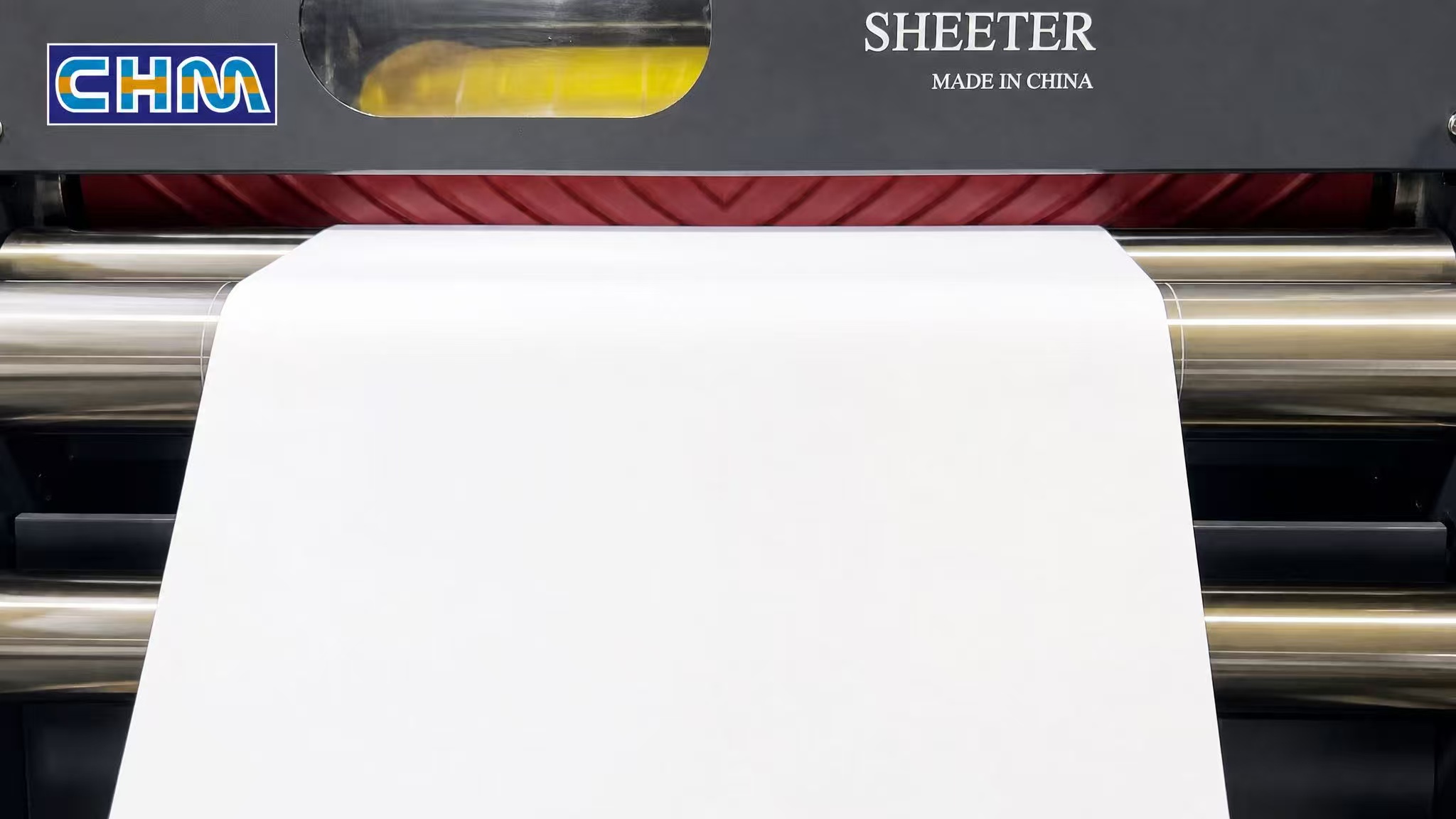
Different Food Packaging Papers, Different Slitting Challenges
Not all food packaging paper behaves the same way on a slitter rewinder.
Hamburger wrapping paper is a good example of lightweight paper that requires careful tension control. When running thin paper at high speed, excessive tension can cause stretching, wrinkles or web breaks. If the tension is too low, the paper may become loose or unstable during rewinding.
Greaseproof paper presents another challenge. Its surface properties and relatively low paper weight require a suitable cutting setup to achieve clean slit edges. Poor cutting conditions may result in rough edges, paper dust or uneven rolls.
PE-laminated kraft paper is more demanding because it combines paper with a plastic coating. If the material is not handled properly, the PE layer may wrinkle, stretch or separate near the cutting edge.
A suitable knife system and stable web tension are important for maintaining the integrity of the laminated structure.
These are not problems that can be solved by simply increasing machine speed. The entire slitting process needs to be properly matched to the paper material.
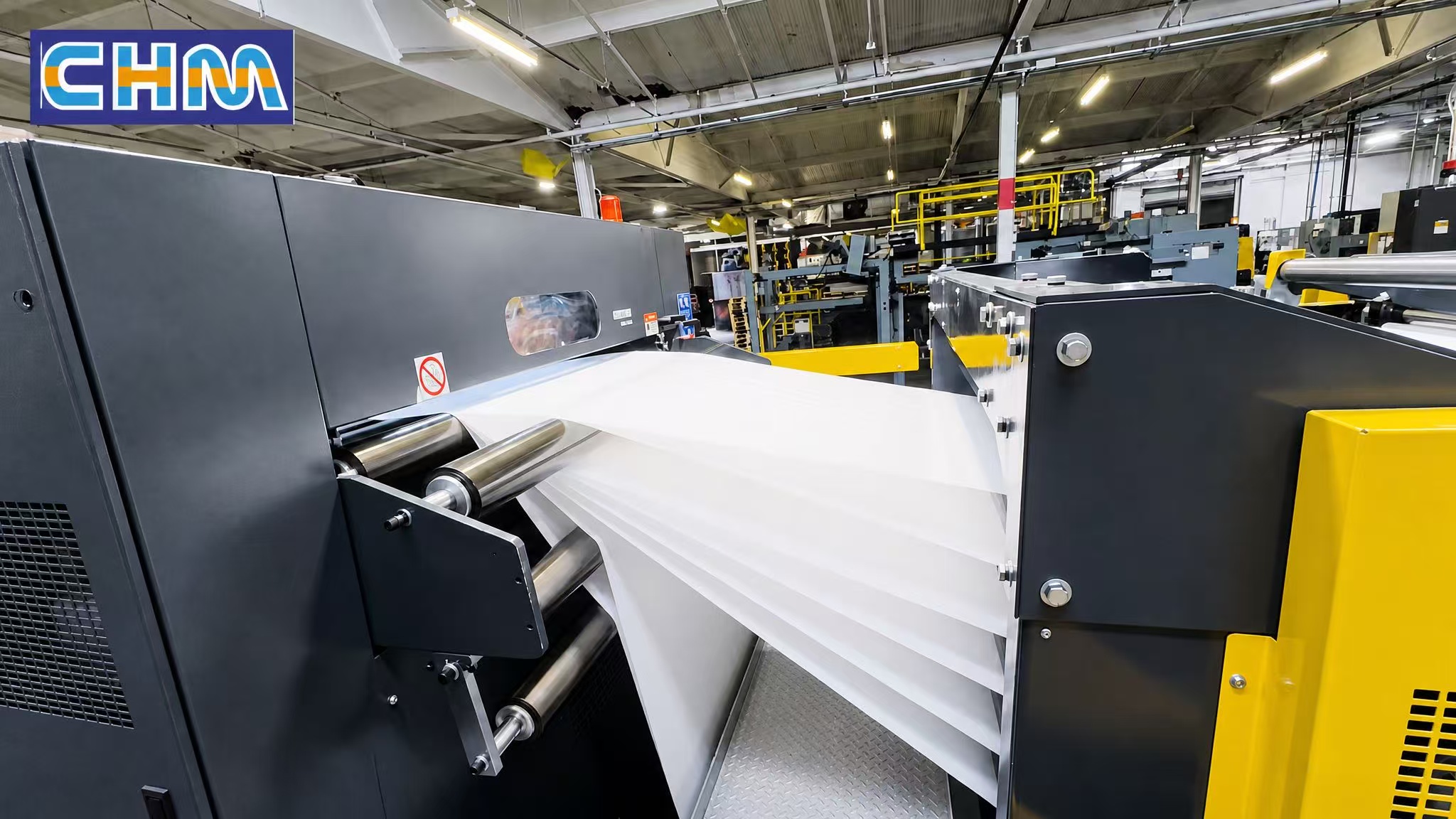
CHM Slitter Rewinder: Built for Different Paper Materials
CHM paper slitting machines are designed for paper converters who need reliable cutting performance across different paper grades and production requirements.
Rather than treating every material in the same way, the machine configuration can be adjusted according to paper weight, roll width, finished roll size and material characteristics.
Several key features help improve the slitting process.
1. Stable Tension Control for Lightweight Paper
When processing thin materials such as hamburger paper and greaseproof paper, web tension is one of the most important factors.
Unstable tension can cause wrinkles, loose winding, uneven roll edges and even paper breaks during continuous production.
CHM's tension control system helps maintain consistent web tension throughout the slitting and rewinding process. With suitable tension settings, lightweight paper can run more smoothly, reducing unnecessary stretching and improving finished roll consistency.
This is particularly important for customers processing thin food packaging paper at higher production speeds.
2. Clean Slitting Edges with the Right Knife Setup
A clean cutting edge is essential for finished paper rolls.
For PE-coated kraft paper, poor cutting conditions may damage the coating or leave rough edges. For thin greaseproof paper and hamburger wrapping paper, an unsuitable knife setup may lead to paper dust, uneven cuts or unstable web handling.
CHM offers suitable slitting knife configurations according to different material requirements.
The shear knife system provides controlled cutting action and helps achieve clean, even edges when properly matched to the material.
The goal is simple: narrower rolls with consistent widths and edges that are ready for the next production process.
3. Better Roll Quality During Rewinding
Slitting quality is only part of the job. The finished rolls also need to be properly rewound.
Uneven tension during winding can result in loose rolls, telescoping or uneven roll edges. These problems may affect subsequent packaging operations and create additional material waste.
CHM's rewinding system is designed to maintain stable winding conditions and produce neat, consistent finished rolls.
For customers supplying small paper rolls to food packaging manufacturers, an automatic turret rewinder can also be configured to reduce downtime during roll changes and improve production continuity.
4. Static Control for Smoother Paper Handling
Static electricity can become a problem when processing lightweight paper, especially in dry production environments.
Static may cause paper to stick together, attract dust or create difficulties during material handling.
An integrated static elimination unit can help reduce static-related issues during slitting and rewinding, making the production process more manageable.
Combined with suitable tension and cutting settings, it helps improve overall paper handling.
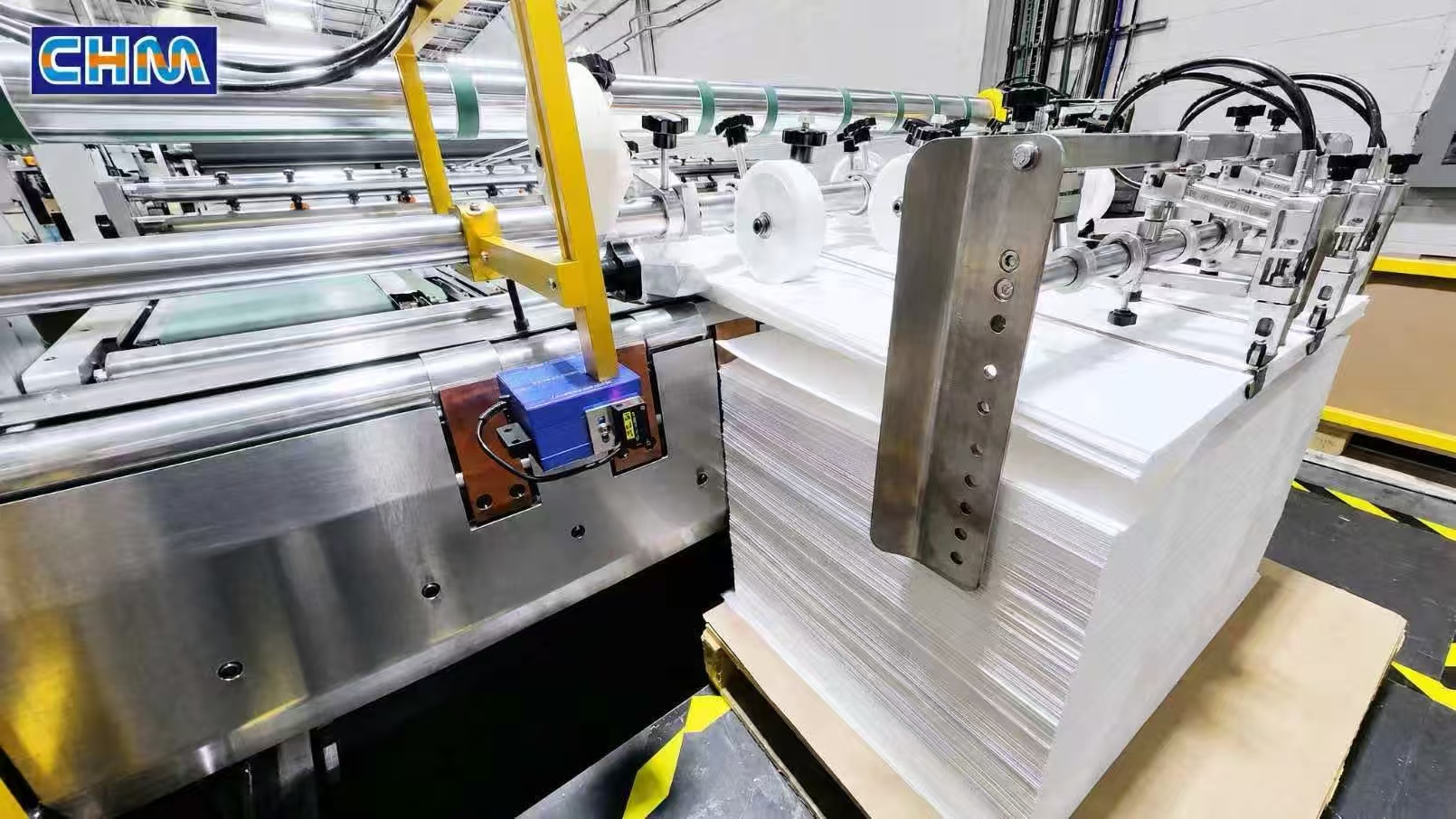
More Than Ordinary Paper Slitting
At CHM, we understand that paper converters work with more than standard printing and copy paper.
Food packaging applications often involve different paper weights, surface treatments and material structures. A machine that performs well on ordinary paper may need a different setup to handle thin wrapping paper or laminated materials.
That is why material testing and machine configuration matter.
Before delivery, machine settings can be checked against the customer's material requirements. Trial runs help evaluate feeding stability, cutting quality and finished roll consistency, allowing potential issues to be identified before the machine reaches the customer's factory.
Whether you are processing 28 GSM hamburger paper, greaseproof paper or PE-coated kraft paper, the right slitting solution starts with understanding the material.
Looking for a Slitting Machine for Food Packaging Paper?
From ultra-thin hamburger wrapping paper to coated and laminated kraft paper, CHM provides paper slitting and rewinding solutions for a wide range of paper converting applications.
We focus on the details that matter in daily production: stable feeding, suitable tension control, clean cutting edges and consistent finished rolls.
If you are planning to process food-grade packaging paper, send us your paper weight, roll width, material type and required finished roll sizes.
Tell us what paper you need to slit. CHM will help you find a suitable machine configuration for your production needs.

